


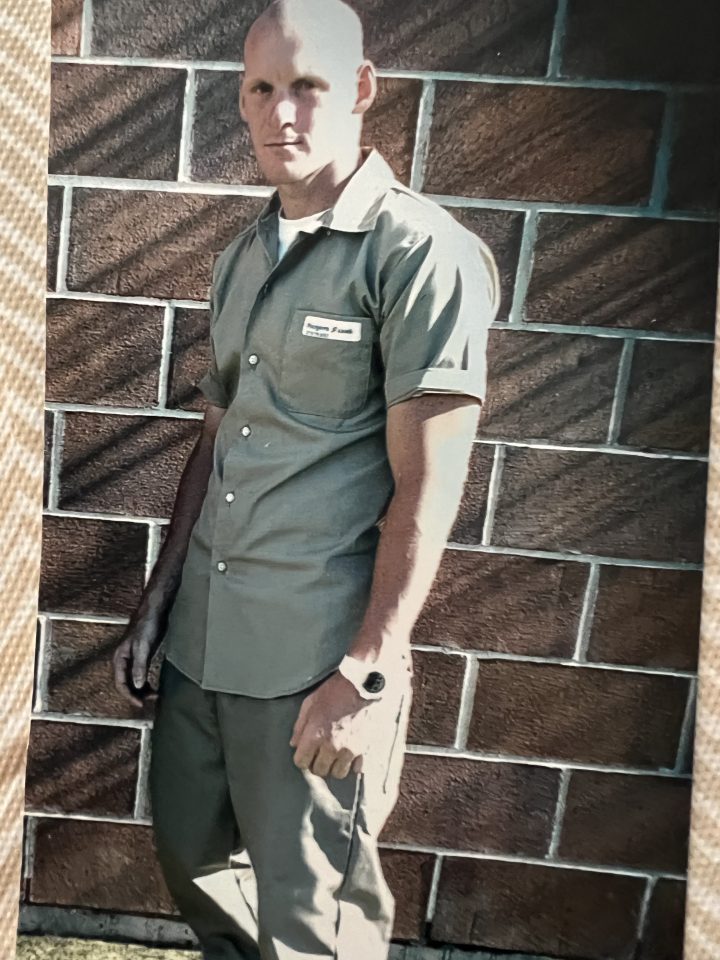
Legalization made room for brands, tax revenue, and respectability. For Frank Rogers, still serving time on a federal marijuana conspiracy case, it still hasn’t made room for freedom.
The cannabis industry has transformed faster than almost anyone predicted. What once operated as an underground economy defined by secrecy, risk, and survival has evolved into a multibillion-dollar global market. Legal cannabis companies now employ tens of thousands of workers, operate technologically advanced cultivation facilities, and generate billions in annual tax revenue for state governments. Cannabis conferences fill massive convention halls across the country while investors debate expansion strategies and entrepreneurs launch brands with marketing budgets that dwarf the resources of the illicit markets that once dominated the plant’s economy.
Yet beneath the excitement surrounding legalization and industry growth lies a reality that is far less comfortable to discuss. While licensed dispensaries open their doors across North America and governments collect billions in cannabis taxes, there are still people sitting in prison cells for nonviolent cannabis offenses committed during the height of the War on Drugs. Their lives were interrupted by policies that modern society increasingly recognizes as excessive and misguided, and many remain incarcerated for conduct that would today be considered a legitimate business activity in multiple states.
Frank Rogers is one of those people. A federal prisoner who has already spent more than a decade behind bars, Rogers represents a reality that the modern cannabis movement often struggles to confront. Advocacy groups estimate that roughly 32,000 people remain imprisoned nationwide for cannabis-related crimes, including people in federal custody and many more in state prison systems.


Frank Rogers’ story is not simply about one man serving time for cannabis. It reflects the enduring legacy of prohibition and the long shadow cast by decades of drug war policies that continue to shape the lives of people long after the political climate surrounding cannabis has changed.
For individuals like Rogers, the path to freedom is not straightforward. The legal mechanisms that put them behind bars remain firmly in place, and for many federal cannabis prisoners the only realistic avenue for release is through the constitutional power of presidential clemency.
The War on Drugs and the Rise of Mass Incarceration
Understanding why people like Frank Rogers remain incarcerated requires revisiting the policies that fueled America’s dramatic expansion of its prison population during the late twentieth century. The War on Drugs, formally declared in the 1970s and intensified throughout the 1980s and 1990s, fundamentally reshaped the American criminal justice system. What began as a political campaign aimed at combating narcotics quickly evolved into one of the most aggressive law enforcement strategies in modern history.
Lawmakers enacted sweeping sentencing laws designed to impose severe penalties for drug offenses. Mandatory minimum sentencing provisions removed much of the discretion previously available to federal judges, ensuring that certain drug crimes automatically triggered lengthy prison terms regardless of individual circumstances. Prosecutors gained additional leverage through expansive conspiracy statutes that allowed multiple individuals to be charged together as participants in a single criminal enterprise. These statutes meant that defendants could be held responsible for the total quantity of drugs associated with a case rather than only the amount directly linked to their own conduct.
The consequences of these policies were dramatic. In the early 1980s, approximately 40,000 individuals in the United States were incarcerated for drug offenses. Within a few decades, that number had increased more than tenfold. By the early twenty-first century, nearly half a million people were serving time for drug-related crimes across the country.
Cannabis played a significant role in this surge of enforcement. Although many Americans viewed marijuana as less harmful than other controlled substances, federal law classified cannabis as a Schedule I drug, placing it in the same legal category as heroin and other substances considered to have no accepted medical use. This classification provided federal prosecutors with broad authority to pursue marijuana cases aggressively and seek severe penalties under the same sentencing frameworks used for far more dangerous narcotics.
According to publicly reported arrest data, at the peak of enforcement in 2016, law enforcement agencies in the United States made more than 1.5 million drug arrests in a single year. More than 640,000 of those arrests involved marijuana violations, the vast majority for simple possession.
The War on Drugs succeeded in filling prisons, but it did little to eliminate drug use or the markets that supplied it. Instead, it created a system of mass incarceration whose effects are still being felt today.
The Human Cost of Cannabis Prohibition
Statistics about arrests and incarceration often obscure the human stories behind them. Each number represents a life that was disrupted by the criminal justice system and a family forced to navigate the consequences of that disruption. For individuals convicted under federal drug laws, the punishment frequently extended far beyond the sentence imposed in court.
Families lost parents, children grew up without fathers or mothers, and communities absorbed the social and economic costs of large numbers of people being removed from their neighborhoods for years at a time. Mandatory minimum sentencing laws often prevented judges from considering the individual circumstances of defendants, leaving little room to adjust punishments even when the facts of a case suggested a more measured approach might be appropriate.
Cannabis defendants were frequently caught in this system despite the absence of violence in their cases. Individuals whose involvement with marijuana might have consisted of distribution within informal networks were suddenly facing penalties comparable to those imposed for far more serious offenses.
The irony of these sentences has become increasingly apparent as public attitudes toward cannabis have evolved. Over the past two decades, voters and lawmakers across the United States have dramatically reconsidered the role of marijuana in society. Medical cannabis programs now operate in the majority of states, and adult-use legalization continues to expand.
Today, licensed businesses cultivate cannabis openly in large-scale facilities, process it into a wide range of consumer products, and sell it through regulated retail markets. The industry has generated billions of dollars in revenue and created thousands of jobs.
Yet many of the people who were prosecuted for participating in that same marketplace years earlier remain incarcerated.
Frank Rogers and the Legacy of Prohibition
Frank Rogers’ case illustrates the contradictions created by this shift in policy. Rogers pleaded guilty in federal court to a marijuana conspiracy charge under 21 U.S.C. § 846 and received a sentence of 220 months in prison, followed by eight years of supervised release. The case involved nonviolent cannabis activity prosecuted under federal conspiracy statutes, which often allow defendants to be sentenced based on the overall scope of a case rather than solely on their individual actions.
Like many defendants caught in federal drug prosecutions, Rogers faced sentencing guidelines and statutory thresholds that resulted in a punishment far longer than he anticipated. At sentencing, the court adopted a guideline range of 210 to 262 months and imposed a 220-month sentence. Defense counsel argued that, but for the career offender designation, Rogers would have faced a range of 100 to 125 months. Such sentences were common during the height of the War on Drugs, when policymakers believed that severe penalties were necessary to deter drug trafficking.
For Rogers and his family, the consequences have been profound. Years of birthdays, holidays, and ordinary family milestones have passed while he remained incarcerated. The emotional toll of long prison sentences often extends far beyond the individual serving the time, affecting spouses, parents, and children who must rebuild their lives around the absence of a loved one.
In a recent appeal for clemency, Rogers wrote, “I would like to give a special thanks to my best friend, Kristin/HOPE, for never giving up on fighting for me, plus my mother, Rose Rogers, who never stops fighting for me. I love you momma bear and to the Beard Brothers who made this possible, thanks, God bless. I respectfully ask Alice Johnson, President Donald Trump, and the Office of the Pardon Attorney to please grant me clemency so I may finally return home to my loved ones.”

Organizations that support cannabis prisoners maintain contact with hundreds of incarcerated individuals across the country whose stories mirror Rogers’ experience. Their cases highlight the reality that the criminal justice system’s response to cannabis has not always kept pace with changing public attitudes toward the plant.
The Illusion of Cannabis Justice
The announcement in 2022 that thousands of federal marijuana possession convictions would be pardoned was widely celebrated as a milestone for cannabis reform. Headlines across the country declared that thousands of people had received relief from past marijuana offenses, and the move was hailed as a sign that the federal government was beginning to reconsider its approach to cannabis.
Yet the practical impact of those pardons was far more limited than many observers initially believed. The individuals covered by the policy were people who had been convicted of simple marijuana possession under federal law, and most had already completed their sentences. In fact, at the time of the announcement, no one was serving a federal prison sentence solely for simple possession of marijuana.
The reality is that most people incarcerated for cannabis in federal prisons were convicted of distribution or conspiracy charges rather than simple possession. As a result, the pardons did little to address the situation faced by individuals serving long sentences for cannabis offenses.

Advocacy groups estimate that thousands of people remain incarcerated at the federal level for cannabis-related crimes despite the shift in public opinion surrounding marijuana.
Why Presidential Clemency Matters
The structure of the federal criminal justice system leaves individuals serving long sentences with limited options once their appeals have been exhausted. Courts are generally reluctant to revisit cases simply because public attitudes or policy priorities have changed. Even when lawmakers pass reforms designed to address overly harsh sentencing laws, those changes rarely apply retroactively to individuals who were sentenced under earlier statutes.
This legal reality leaves presidential clemency as one of the few tools capable of addressing the lingering consequences of the War on Drugs. Under the Constitution, the President has the authority to grant pardons and commutations for federal offenses. This power allows the executive branch to intervene when the justice system produces outcomes that no longer align with contemporary standards of fairness.
Presidents from both political parties have used clemency to address harsh drug sentences. During his administration, President Barack Obama granted clemency to nearly 2,000 individuals, many of whom had been convicted under the mandatory minimum sentencing laws that defined the War on Drugs.
More recently, President Biden issued pardons for thousands of individuals convicted of federal marijuana possession offenses. While those actions represented an important symbolic shift, they did not address the larger population of individuals serving lengthy sentences for cannabis distribution or conspiracy charges.
For prisoners like Frank Rogers, presidential clemency remains the most realistic path to freedom.
Legalization and the Industry’s Moral Dilemma
The modern cannabis industry now occupies a unique position in American society. What was once criminalized behavior has become a legitimate economic activity celebrated by investors, policymakers, and consumers alike. Cannabis companies advertise openly, operate sophisticated cultivation facilities, and expand into new markets with the support of regulators and financial institutions.
Yet the industry’s growth has also exposed a moral contradiction. Many of the pioneers who helped sustain cannabis culture during the years of prohibition did so under constant threat of arrest and imprisonment. Some of those individuals remain behind bars even as legal cannabis businesses flourish.
The contrast between a thriving legal market and the continued incarceration of cannabis offenders has become one of the most challenging ethical questions facing the industry. Legalization created new economic opportunities, but it did not automatically deliver justice for the people who were punished under earlier policies.
A Movement Still in Progress
The movement for cannabis reform has achieved remarkable progress over the past several decades, but its work is not yet complete. Addressing the legacy of prohibition requires more than legal markets and regulatory frameworks. It requires confronting the human consequences of decades of aggressive drug enforcement.
For individuals like Frank Rogers, the outcome of that conversation will determine whether they remain prisoners of a policy that society has largely abandoned.

Presidential clemency offers one pathway toward correcting those injustices. By commuting the sentences of cannabis offenders, the federal government can begin to reconcile the past with the present and acknowledge that many of the punishments imposed during the War on Drugs no longer reflect the country’s evolving understanding of cannabis.
For Frank Rogers, clemency would not represent a political victory or a policy milestone. It would mean something far simpler and far more important.
It would mean going home.
Freedom Grow exists for the exact reason Frank Rogers’ story should hit a nerve. It’s a grassroots, all-volunteer nonprofit created to support cannabis prisoners and their families right now through commissary help, books, family assistance, and real re-entry support. While the political system drags its feet and the legal market cashes checks, Freedom Grow keeps people alive, connected, and supported. This isn’t charity for optics. It’s community taking care of the community, with donations going directly to prisoner support and re-entry needs.
I’m not saying this from the sidelines. I’m Bill Levers, CEO of Freedom Grow, and my brother Jeff Levers serves as COO. We stepped into these roles because legalization without liberation is a lie, and we’re not interested in letting the industry move on while people are still stuck inside for cannabis charges. If you believe this plant should never have cost anyone their life or freedom, you can learn more or support the work at freedomgrow.org/donate.
Case details referenced in this essay are drawn from federal court records, including the complaint, judgment, and sentencing transcript.
This article is an opinion piece from an external, unpaid contributor. The views expressed are those of the author and do not necessarily reflect the views of High Times. The article has been lightly edited for clarity and length.
Bill Levers is CEO of Freedom Grow, a nonprofit that supports cannabis prisoners and their families, and co-founder of Beard Bros Pharms.
