


Legalization promised a future for small growers. In Michigan, one would-be craft operator found a market built for speed, scale, and deep pockets.
Growing up in the late 1980s and early 1990s, I remember a local police officer from the D.A.R.E. program coming into my elementary school classroom with a high school football player who looked impossibly large to a room full of third- and fourth-graders. They warned us about marijuana with the seriousness of a hostage negotiation.
We were told drugs would ruin our futures, disappoint our parents, destroy our athletic dreams, and maybe turn us into criminals before we had a chance to become anything else. At some point, they taught us a song about refusing drugs and “calling the shots” in our lives. Even then, most of us sensed some bullshit in the air.
The town I grew up in had more bars than churches. Adults treated alcohol like weather: sometimes unpleasant, occasionally dangerous, but mostly unavoidable. Factory work, stress, beer, and silence all seemed to live in the same neighborhood. But cannabis was the moral emergency. That contradiction stayed with me because kids notice when adults build entire systems around pretending.

Legalization Changed the Permission Structure
Years later, after legalization began moving across the country, I found myself inside a different contradiction. Cannabis had gone from something people whispered about to something cities, investors, attorneys, consultants, landlords, and regulators could all make money discussing in public. The plant had not changed that much. The permission structure had.
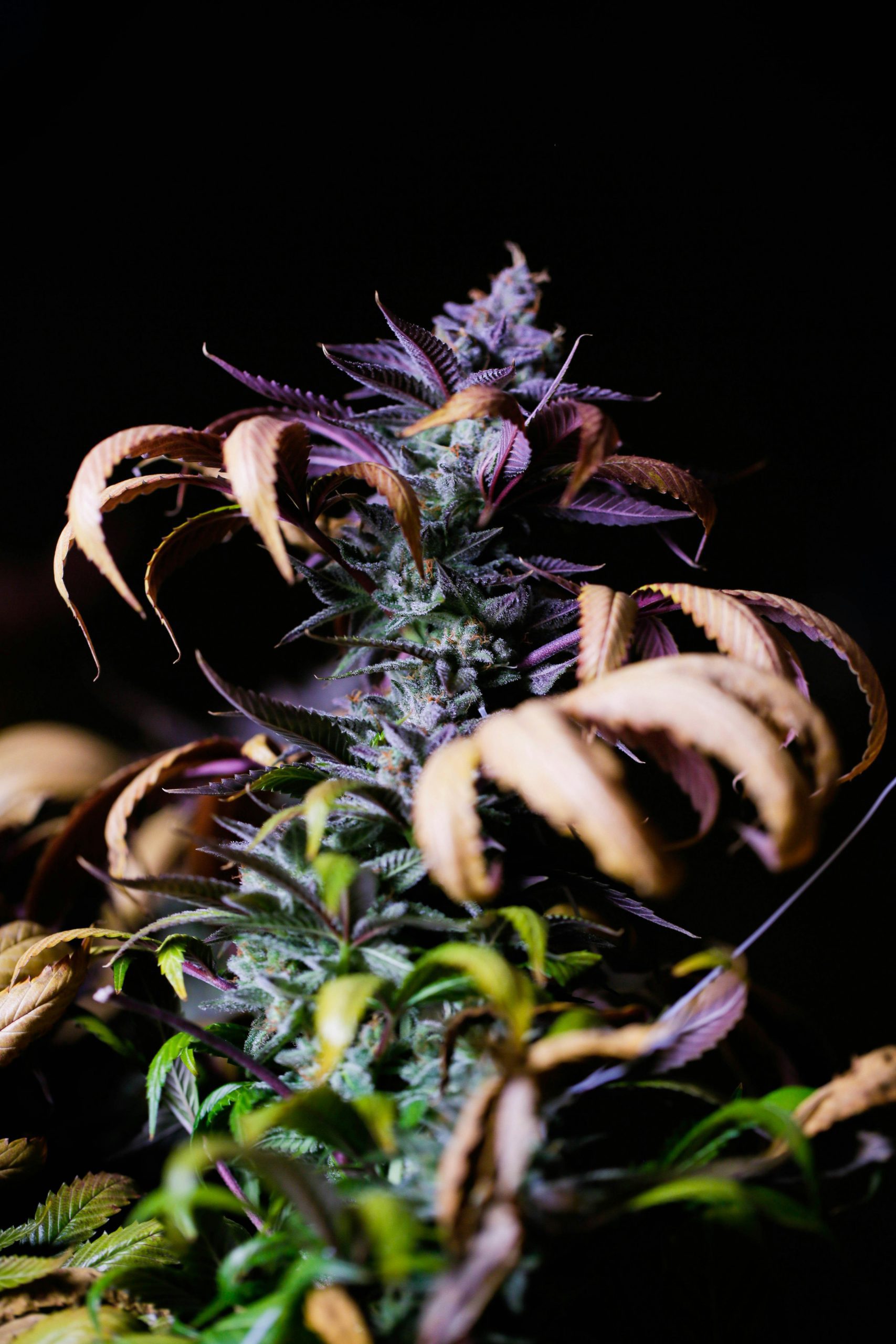
For me, craft cannabis never meant luxury branding or boutique jars with embossed labels. It meant cultivation at a human scale. Small batches. Careful genetics. Living soil or thoughtful hydroponics. Slow drying. Proper curing. Hands that knew the plants. Growers who cared about aroma, structure, resin, effect, and the difference between “good enough to sell” and “good enough to be proud of.”
Craft cannabis meant time. And time became the first thing legalization made expensive.
My wife and I learned that directly when we tried to build what we thought legalization was supposed to make possible: a small, sustainable cultivation business in Michigan after adult-use legalization. Michigan voters approved adult-use cannabis in 2018, and recreational sales began in late 2019. By 2020, as the pandemic scrambled everything, we were trying to turn a private cultivation skillset into a legitimate small business.
We were not trying to become the biggest operation in the state. We were not chasing a quick flip or pretending cannabis was a tech startup with leaves. The idea was intentionally modest: small-batch, organic, sustainably grown, competition-grade flower. The kind of cannabis that respected the culture it came from instead of strip-mining it for margin.
We had experience. We had a plan. We had also lived the strange professional silence around cannabis, where plenty of competent adults used it privately but understood that saying so publicly could still damage their credibility. I had worked around healthcare systems long enough to know that legality and acceptability are not the same thing. When the pandemic arrived, something shifted. Like a lot of people, we stopped editing ourselves for institutions that suddenly seemed less stable than they had advertised. We decided to move forward publicly.
The License is Not the Business
That was the moment I learned one of the harder truths of legalization: the license is not the business.
The license is a receipt. It proves you spent enough time, money, and energy to be considered by people who still have no obligation to make the process workable. You pay to apply. You wait. You revise. You adapt to shifting requirements as the market around you changes. You try to build responsibly in a system that rewards speed, scale, and financial elasticity.
This is often described as rigor. In practice, it functions like filtration.

Legalization did not create one single Michigan market. It created a state framework filtered through local control. Municipalities could decide whether to allow cannabis businesses and under what conditions. On paper, that sounds democratic. In reality, for small operators, it can feel like building a business on top of a trapdoor.
Until a municipality decides to allow cannabis businesses, certainty is impossible. Only then do the real costs emerge: fees, conditions, delays, infrastructure demands, zoning friction, and the simple cost of waiting.
In one Michigan town, we bought land and built a sustainability framework around energy, water, waste, and local labor. Not as marketing. As belief. We wanted the business to fit the place it was entering. Then the rules shifted. The opportunity narrowed. What had been possible became impractical. The project did not explode. It was edited out.
That is how a lot of small cannabis dreams die. Not in one dramatic rejection. They die by delay, ambiguity, fee creep, capital fatigue, and the slow realization that being legally allowed to participate does not mean the system was designed for you to survive.
Meanwhile, larger operators could absorb uncertainty as a cost of entry. They could sit on property, hire attorneys, run multiple applications, lose money longer, and treat local confusion as a line item. Small growers could not.
Abundance Forgives a Lot
And then came oversupply.
Oversupply arrives disguised as success. Shelves fill. Harvests move. Retailers multiply. Consumers see cheaper ounces and assume the system is working. In some ways, it is. Affordable cannabis matters. Lower prices can benefit patients, consumers, and adults who were overcharged for years by prohibition, scarcity, and risk. The problem is not that prices fell. The problem is what the market stopped rewarding once they did.
Abundance forgives a lot. But for growers, abundance changes the physics of the market.
When prices fall, time loses value. Slow drying becomes a liability. Long curing becomes expensive. Hand trimming becomes harder to justify. Living soil becomes harder to scale. Training goes first. Then sustainability. Then culture. Then the stubborn idea that cannabis was supposed to become something better than another race-to-the-bottom commodity.
No one has to announce the death of craft. The spreadsheet handles it quietly.
Michigan is a clear example. The state became one of the nation’s largest adult-use cannabis markets, with annual sales exceeding $3 billion. But volume did not protect operators from falling prices, oversupply, intense competition, and thinning margins. State sales data and industry reporting have repeatedly documented the same basic pattern: more product, lower wholesale prices, and a market increasingly difficult for small cultivators to survive.
That is the paradox. More cannabis does not automatically mean a healthier cannabis culture. More licenses do not automatically mean more opportunity. More stores do not automatically mean more room for the people who helped build the market before it was legal to admit one existed.

Legalization Replaced One Kind of Risk With Another
Before legalization, the risks were obvious: arrest, prosecution, forfeiture, violence, stigma, professional consequences. The old system was cruel, irrational, and unevenly enforced. I am not romanticizing it. Nobody should have gone to jail over a plant.
But the new system created different risks: debt, overproduction, regulatory friction, municipal politics, predatory real estate, tax pressure, consolidation, and the quiet removal of growers who lacked enough capital to wait out the chaos.
The people who survived prohibition were not necessarily the people best positioned to survive legalization.
Because craft cannabis was never just about product quality. It was about memory. It carried the knowledge of caregivers, basement growers, legacy cultivators, patients, activists, and people who kept the culture alive when institutions still treated cannabis as a punchline or a threat. Many helped normalize the plant long before normalization became profitable.
Then capital arrived clean, late, and allergic to context.
Cannabis became real estate. Infrastructure. Branding. Market share. Tax revenue. A development strategy. A municipal budget conversation. A pitch deck with better lighting than the grow room. Once that happened, the culture had to compete against its own legalization.
Culture is bad at competing with capital because culture remembers. Capital does not remember the people who signed petitions, grew medicine for patients, taught others how to cultivate, risked reputations, lost jobs, lost freedom, or stayed quiet for decades because the world was not ready to be honest.
Capital sees opportunity. Opportunity usually means someone else already paid the price.


The Culture Did Not Win Just Because the Plant Became Legal
The result is not that all legal cannabis is bad. That would be too easy, and it is not true. There are still excellent growers, serious operators, principled dispensaries, and consumers who care deeply about quality. Craft has not vanished entirely. It has been cornered.
It has become a niche in a market that rewards volume, surviving around the edges of rules written for someone else.
The educated consumer was never going to fix this alone. People still care about quality, but price talks loudly, especially when everything else in life is getting more expensive. When education competes with convenience, convenience usually wins. Markets respond to behavior, not ideals.
Consumers adapted. Growers adapted or disappeared.
Cannabis became more consistent, more available, more professional, and more interchangeable. In some ways, that is what legalization promised. In other ways, it is exactly what legalization should have protected against.
The question is not whether cannabis should be legal. Of course it should. The question is what kind of legal market we built, who it was built for, and why the people closest to the plant so often ended up furthest from the opportunity.
I still think back to that D.A.R.E. classroom sometimes. The police officer. The oversized football player. The song about calling the shots in your life. The adults warning us about marijuana while ignoring the damage already normalized around us.
Back then, the lie was that cannabis would destroy everyone who touched it. Now the lie is more polished. It says legalization means the culture won.
But if legalization creates a market where only the fastest, biggest, and best-capitalized can endure, then the culture did not win. It was acquired.
Craft cannabis did not die because people stopped caring. It got priced out of the room. And once you have watched a plant move from contraband to culture to commodity, you become very careful about what people call progress.
This article is from an external, unpaid contributor. It does not represent High Times’ reporting and has not been edited for content or accuracy.
