


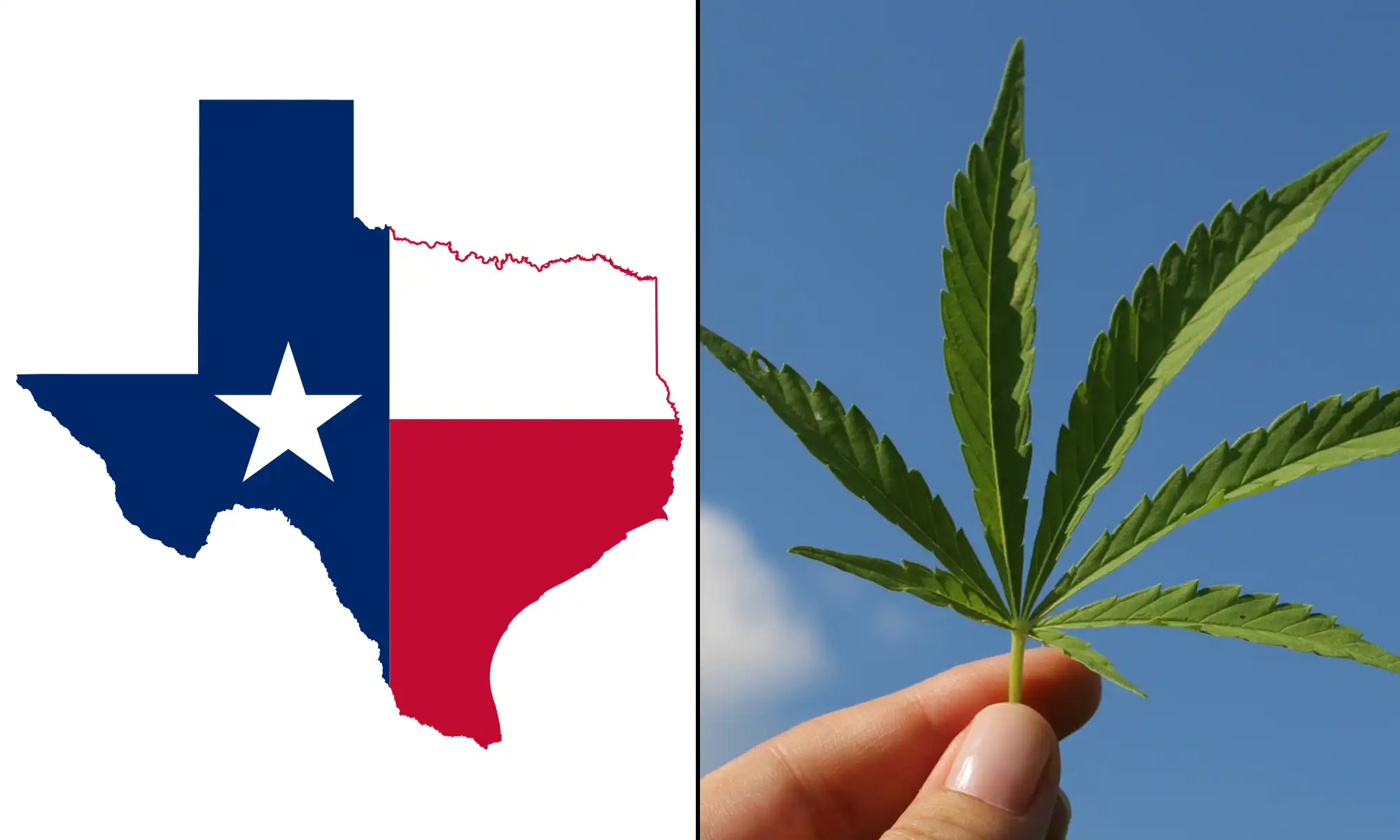
“Texas can protect children and consumers without rebuilding the drug war.”
By Michael A. Davis
Texas officials have spent years treating hemp-derived THC as if it were the greatest danger facing the state. Now the crackdown is no longer political theater.
Beginning July 31, Texas restored a controlled substance schedule that allows products labeled as containing delta-8 THC—or found to contain more than trace amounts of certain tetrahydrocannabinols—to be detained and referred to law enforcement.
That does not mean every hemp product is illegal. Products that comply with the state’s delta-9 THC limit remain legal. But it does mean many products that adults bought openly from registered businesses have suddenly been pushed out of the regulated marketplace.
Texas leaders may call that a public-safety victory. I see a policy that could make the market less safe.
I write from the perspective of someone who has lived through incarceration and spent years working on reentry. I know how quickly lawmakers can turn a complicated social problem into a criminal offense.
I also know what happens after the speeches end. The politician moves to the next issue, while ordinary people live with arrests, records, lost jobs and closed doors.
There are legitimate concerns about intoxicating hemp products. Some have been sold in packaging that appeals to children. Potency can be inconsistent. Labels can be confusing, and testing standards have not always given consumers the protection they deserve.
No responsible advocate should dismiss those problems. But those problems call for regulation, not denial.
Texas already showed that it knows how to build guardrails. The state imposed a minimum purchase age of 21 and required government-issued identification. Regulators adopted rules involving labeling, testing, packaging and inspections. Those protections could have been strengthened with uniform dosage limits, random state testing, tougher penalties for businesses that sell to minors and clear rules against child-oriented advertising.
Instead, Texas chose to remove certain products from legal shelves while leaving demand in place.
That is where the real danger begins.
A licensed retailer can be inspected. Its products can be tested. A batch can be traced or recalled. A business can lose its license for selling to a child. An illegal seller has no license to lose, no testing requirement to follow and no reason to check identification.
A teenager who walks into a compliant smoke shop should be asked for identification. A dealer operating through social media, a parking lot or an unregulated delivery network will not care whether the customer is 17 or 37.
This crackdown does not eliminate hemp-derived THC. It creates more room for untested products, counterfeit labels and sellers who cannot be held accountable. It may also give organized criminal networks another market to exploit.
That does not mean every illegal sale is tied to a cartel, and we should not make claims the evidence cannot support. But when government closes a legal channel without ending consumer demand, illegal suppliers gain an opening. That is basic economics, not fearmongering.
Texas applies a different standard to alcohol.
Alcohol is sold in grocery stores, convenience stores, restaurants, stadiums and entertainment districts. It is present in homes and at parties across the state. A teenager may never need to fool a cashier to get it; the alcohol may already be in a refrigerator or handed over by an older friend.
Texas does not respond by outlawing beer, wine and liquor for adults. It licenses sellers, checks identification, taxes the products and penalizes violations. The system is imperfect, but the principle is clear: Adult access can coexist with rules designed to protect children.
Alcohol and hemp are not identical. They do not have to be identical for the double standard to matter. If Texas believes regulation can reduce the risks associated with alcohol, it should explain why regulation is suddenly considered impossible when the product is hemp-derived THC.
The imbalance is even harder to defend when we look at the crises Texas already faces.
The state Department of State Health Services says drug poisoning deaths increased 68 percent from 2019 to 2024. In 2023, drug poisoning was the leading cause of injury-related death for Texans ages 24 to 69. Families are still being devastated by fentanyl, while communities also confront gun violence, violent crime, untreated mental-health needs and unaffordable health care.
Those problems require sustained investment in prevention, treatment, enforcement and recovery. They are expensive, complicated and politically difficult. Banning a product is simpler. It creates a headline and allows leaders to declare victory before the consequences are measured.
We should also be honest about the economic interests surrounding this debate.
Hemp-derived THC beverages are becoming real competitors in the broader adult-beverage market. NielsenIQ reported that mainstream retail sales reached $239 million over the latest 52-week period, an increase of 135 percent from the prior year. Some consumers are replacing a beer, glass of wine or cocktail with a low-dose THC drink.
Some alcohol businesses see that market as an opportunity and have begun selling or distributing THC beverages. Others may see it as a threat. That division matters because “the alcohol industry” is not a single voice. Still, political contributions from people connected to alcohol distribution deserve public scrutiny when Texas leaders push policies that could remove a competing product.
Campaign-finance records have prompted questions about major donations to Lt. Gov. Dan Patrick (R), who led efforts to restrict hemp products in the most recent legislative session, from John Nau, a longtime beer distribution executive. A contribution does not prove a deal, and it would be irresponsible to claim otherwise. But Texans are entitled to ask whether established industries have greater access to political power than the small businesses and consumers who will bear the cost of prohibition.
Following the money is not the same as alleging corruption. It is part of holding government accountable.
Texas can protect children and consumers without rebuilding the drug war.
Require every intoxicating product to be sold only to adults 21 and older. Mandate reliable identification checks, child-resistant packaging and plain labeling. Establish reasonable per-serving and per-package THC limits. Require independent laboratory testing, scannable batch information and random state verification. Punish businesses that mislabel products or sell to minors. Fund public education and impaired-driving enforcement.
Those are not weak measures. They are what serious regulation looks like.
Public safety should be measured by harm reduced, not products banned. If the result of Texas’s crackdown is that adults turn from accountable retailers to illegal sellers, then the state will have created the very danger it claimed to prevent.
The question is not whether hemp should have rules. It should.
The question is whether Texas wants rules that protect people—or prohibition that protects politics.
Michael A. Davis is an Austin-based writer, author and reentry advocate whose work examines Texas politics, criminal justice, public policy and communities too often overlooked by those in power. He is the author of the books “The Road to Reentry,” “Pursuing Redemption,” “Reclaiming Freedom” and “The Mind You Inherited.”
Image element courtesy of AnonMoos.
