


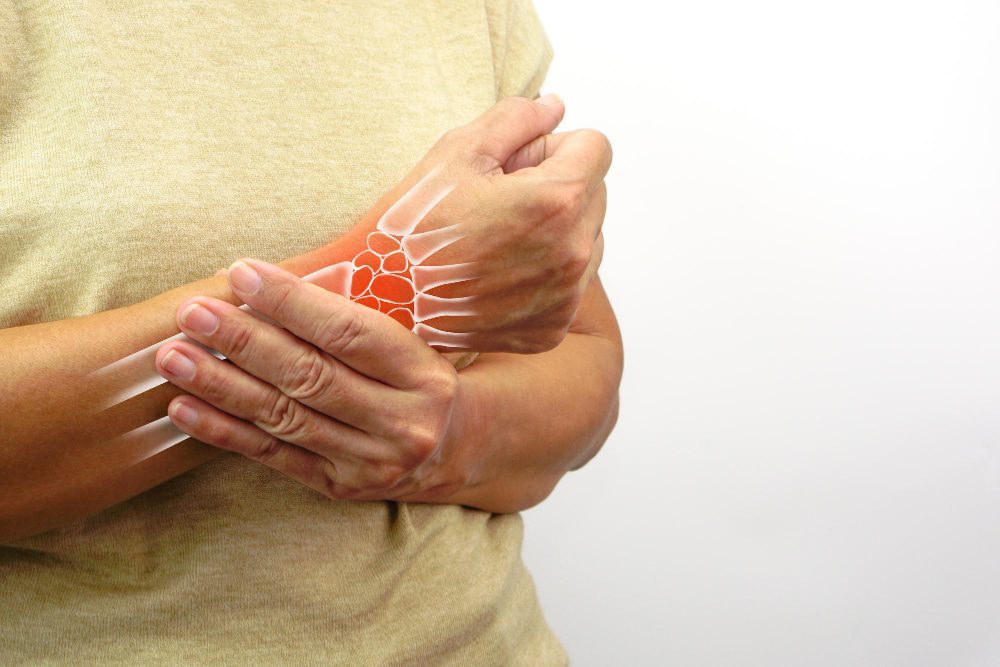
What is Arthritis and Joint Pain?
Arthritis is an ailment that damages your joints. It’s the inflammation in your joints.
While..
Joint pain is pain around or in the joints, but it’s not always caused by arthritis.
What’s the difference between Arthritis and Joint Pain?
Arthritis and joint pain are related, but they are slightly different. Let’s see the key distinction between the two.
Joint pain is a symptom. It’s a sensation; arthritis is one reason you may feel it. Whereas arthritis is a diagnosis, meaning the cause of a disease.
Arthritis is the reason for the majority of joint pain cases.
Let’s dive a little deeper into arthritis.
Arthritis is an umbrella term for over 100 conditions that cause joint inflammation and pain. Osteoarthritis, rheumatoid arthritis, and psoriatic arthritis are common types.
Arthritis can be felt in your hands, wrists, knees, hips, ankles, shoulders, etc.
How to know if you have arthritis and joint pain? You need to know the signs of arthritis.
Signs of Arthritis
If you have any of the following, you might have arthritis:
- Stiffness
- Redness
- Pain in the joints
- Swelling in the joints
- Warmth in the joint region
- Tenderness or sensitivity around a joint
Types of Arthritis
Arthritis is of many types. However, the most common types of arthritis are osteoarthritis, Rheumatoid arthritis, and gout.
Osteoarthritis
When cartilage gets damaged, it’s called osteoarthritis. The cartilage is like a cushion for the joints, which allows for free movement, but when the cartilage breaks down, the joints may get restricted, resulting in pain and low mobility.
Rheumatoid arthritis
Rheumatoid arthritis is an autoimmune condition. In this condition, the immune system attacks the joints as it can’t distinguish between the body and foreign elements. This attack starts from the lining of the joints and is the reason for inflammation and tissue damage.
Gout
Uric Acid crystals develop in the joints because of increasing uric acid in the blood. The high levels of uric acid are called hyperuricemia. It usually happens in the big toe, like a burning sensation.
Other Causes of Arthritis
Injury
An injury, be it from sports or a sudden accident that hasn’t healed properly, can lead to degenerative arthritis.
Infection
Infections like Lyme disease can trigger joint pain and other problems such as nervous system issues, heart problems, sluggish memory, etc.
Tendonitis
Overuse of tendons can cause inflammation; this is called tendonitis. Tendons are the bands connecting the bones (joints) that are present in the elbow, heel, and shoulder.
All these things can cause arthritis, but is there an effective way to reduce arthritis (joint pain and inflammation) without relying on synthetic medications and surgery?
Yes, there is a natural way to reduce arthritis and joint pain.=
It’s called CBD.
Let’s explore this natural solution.
Can CBD help with Arthritis and Joint Pain?
What is CBD?
CBD ( cannabidiol) is one of the active compounds found in the cannabis plant. It’s one of the many cannabinoids found alongside THC, CBG, CBN, terpenes, etc.
Properties of CBD
CBD has medicinal properties such as:
- Antioxidant
- Anti-anxiety
- Anti-tumor effects
- Anti -Inflammatory effects
- Analgesic (pain-relieving) properties
There are more medicinal properties of CBD that help with stress, sleep, and other ailments as well.
How CBD works in the body
CBD influences the endocannabinoid system (ECS), a complex cell signaling system that regulates important functions such as:
- Regulation of the immune system
- Relaxation of the body
- Sleep regulation
- Metabolism
- Memory
- Mood
When the ECS gets dysfunctional, the body experiences many problems like stress, lethargy, weakened immunity, and much more. But CBD makes the ECS functional, and this keeps the body in homeostasis and free from ailments.
How does CBD exactly reduce arthritis and joint pain?
The main reason CBD can help with arthritis and joint pain is due to CBD’s pain-relieving and anti-inflammatory properties.
Since pain and inflammation are the main signs of arthritis and joint pain, CBD becomes a good choice for helping with this problem.
The ECS works throughout the pain pathway, and CBD helps to reduce pain sensitivity.
The ECS mainly functions through two receptors: CB1 and CB2 receptors. The CB1 receptors are densely packed in the pain processing areas like the spinal cord, thalamus, amygdala, and dorsal root ganglia. When the endocannabinoids like anandamide and 2-AG activate the CB1 receptors, the CB1 receptors reduce the release of neurotransmitters that are involved in pain signalling and decrease neural activity, meaning the transmission of pain signals to the brain is reduced.
CBD not only reaches the brain but also the pain region. It reduces the pain signals from the inflamed joint but also helps to reduce the actual pain by regulating overactive cytokines (proteins that help deal with infection, but too many can be harmful, causing inflammation and autoimmune diseases)
CBD has been shown to be effective against inflammatory arthritis in mice due to its immunosuppressive and anti – inflammatory effects, and multiple animal studies show potential.
CBD’s antioxidant properties help with reducing oxidative stress. If oxidative stress is left unchecked, it can increase the inflammation of the already present arthritis.
Recent literature indicates that 62% of CBD users are treating a medical condition, of which anxiety, chronic pain, and arthritis were the most frequent (Corroon & Kight, 2018).
-The CBD Bible
Doctor’s consultation
Before trying CBD products for arthritis and joint pain, make sure to consult with a doctor.
A doctor can help you assess your situation with arthritis and joint pain:
A doctor’s guidance will help you effectively relieve arthritis and joint pain.
Conclusion
Arthritis and joint pain can restrict you from going on trips, playing with your kids, being with your spouse, and living with ease. Since inflammation and pain are the root causes of arthritis and joint pain, you can stop arthritis and joint pain with the help of CBD’s pain-relieving and anti-inflammatory properties.
